
UPDATE
2026.09.08NeuroLab readies its integrated control system for DEEP Robotics quadrupeds in display factories
NeuroLab is exhibiting at WAVE 2026, the World Advanced Vision Expo in Ulsan, and presenting its integrated control system for quadruped robots.
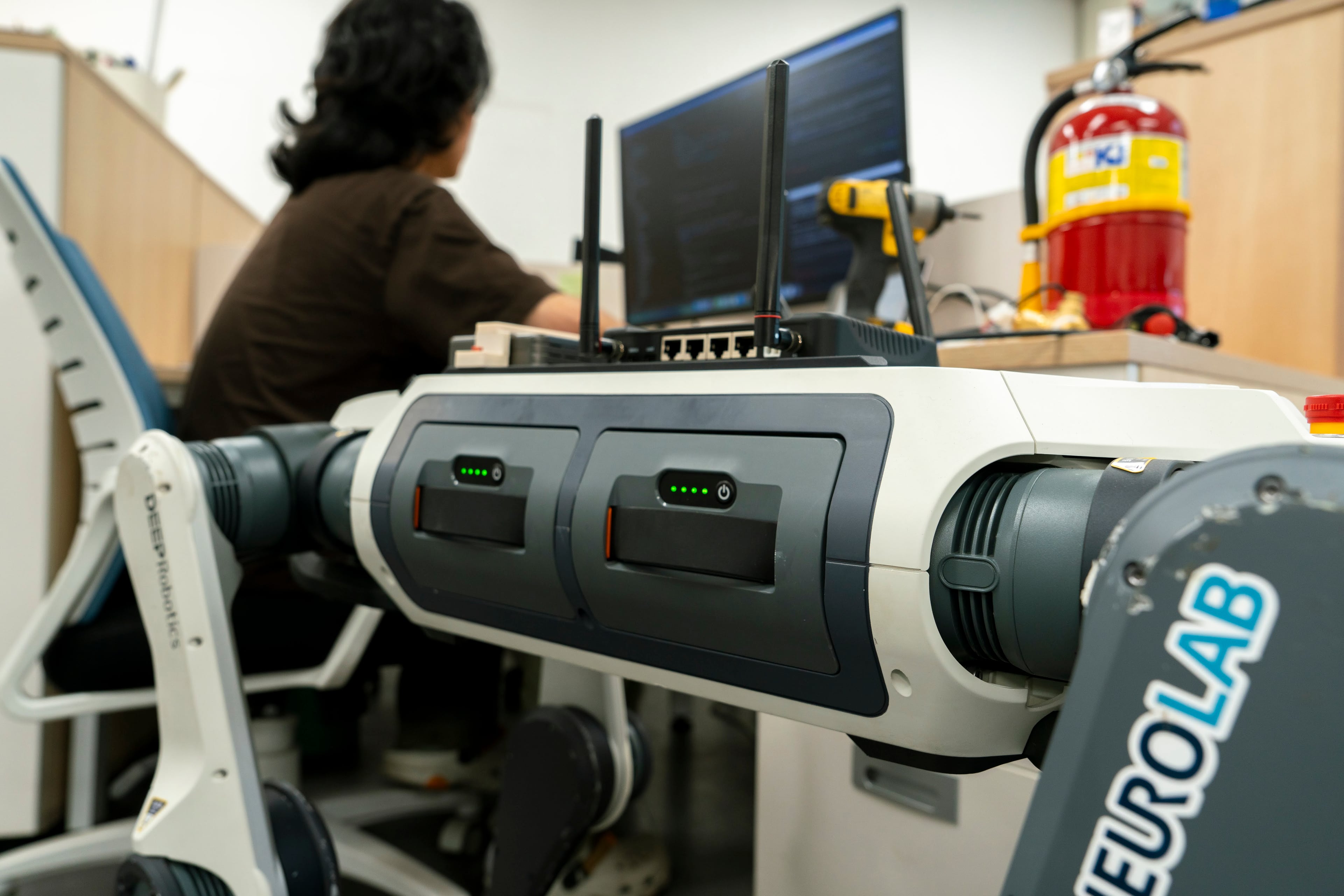
Starting this Thursday, September 10, we are exhibiting at WAVE 2026, the World Advanced Vision Expo, a three-day show at the Ulsan Exhibition & Convention Center (UECO). The expo brings AI and digital technology to the automotive, shipbuilding and energy industries, offering a look at what comes next on the factory floor.
This show is especially meaningful for us, because we develop integrated solutions for industrial sites on top of DEEP Robotics quadruped robots. We hope the customers who visit our booth come away with a concrete picture of how they would use robots in their own factories. This time, NeuroLab received a VIP invitation, which also brought us the organizers' support for our booth and its interior. Since that support has eased the burden of preparing, we are all the more eager to use the expo floor to show technology that can go straight into real-world operations.
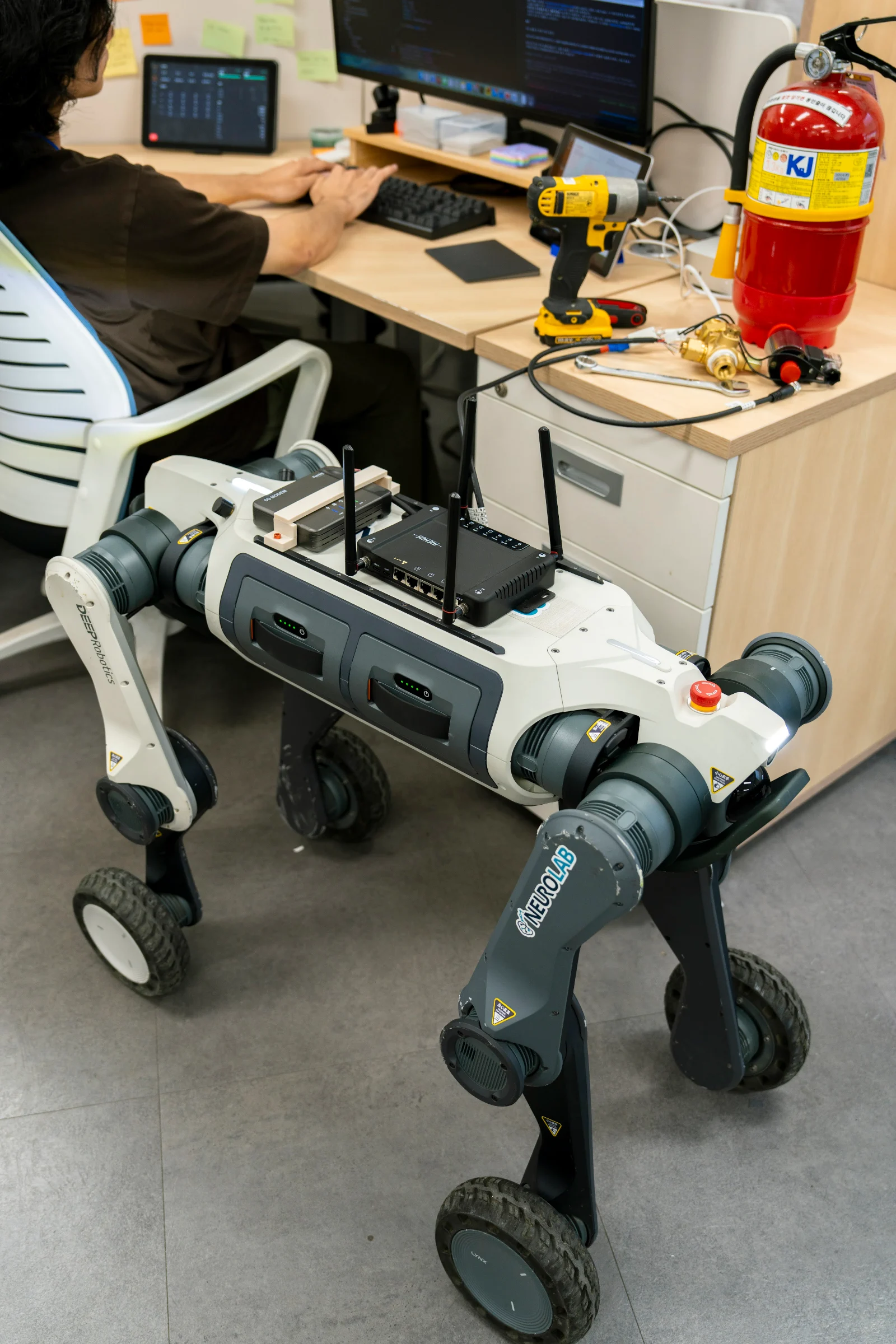
To be honest, taking part in this show was not easy. Our development team is booked solid through the end of the year. Besides handling orders from customers who want to put robots to work in real operations, the team is also pushing ahead on several development roadmaps, so committing to an exhibition at all was a stretch. In the middle of all that, we finished the beta version of our in-house integrated control system.
We think it may be time to drop the beta label, but we are stress-testing the system under a wide range of conditions to refine it further. Beyond the development team, our management and sales teams also play the customer and hunt for weak spots. Only by using the system ourselves and running into its rough edges can we properly understand what customers need.
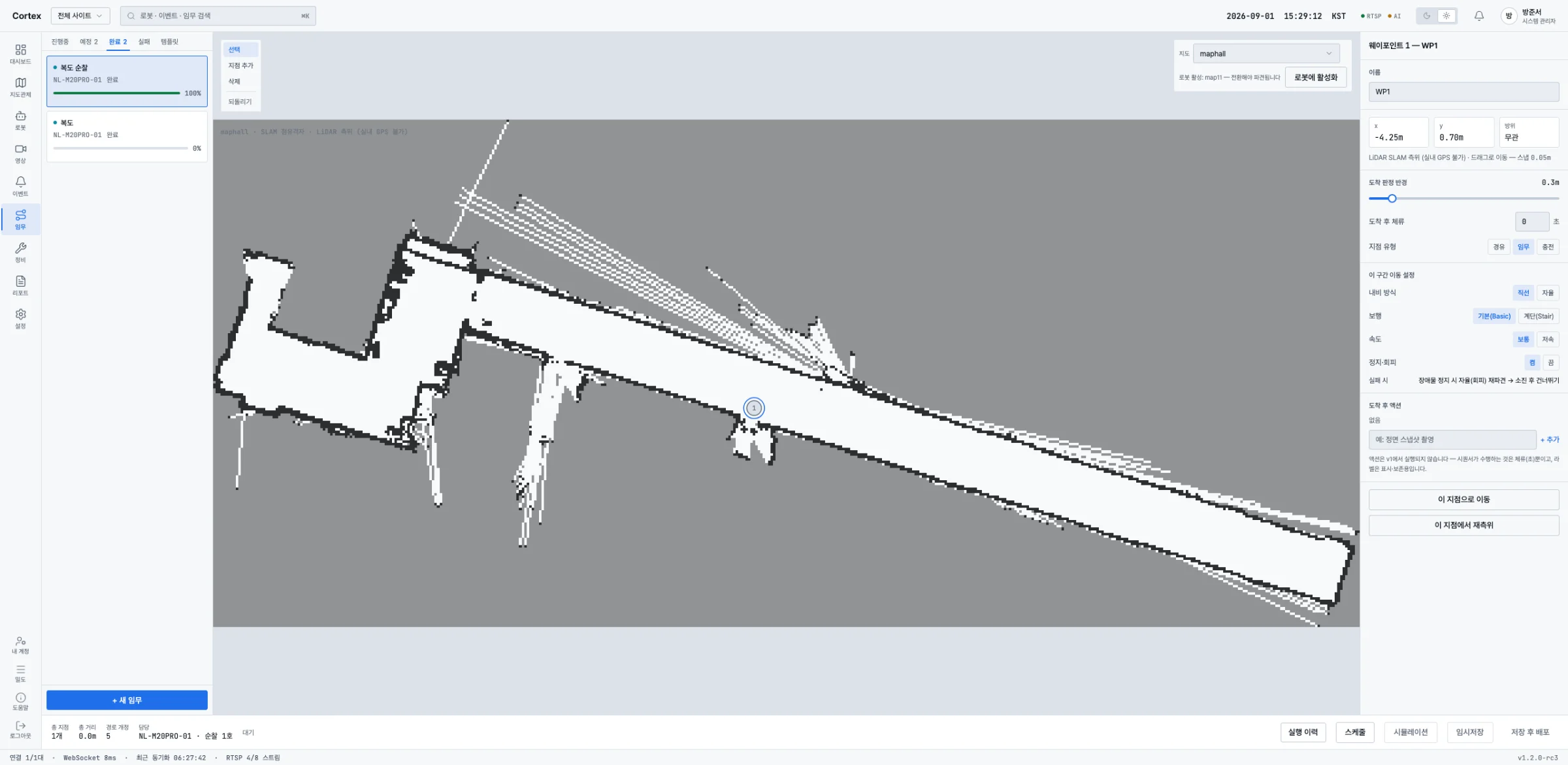
The integrated control system we are refining is designed to let operators manage the robots deployed at each site at a glance from a web interface. After logging in, they can see each robot's location on a map and check its front and rear camera feeds along with its battery level, joint temperatures and connection status. They can set a patrol route and dispatch a mission, and they get alerts when a robot loses its connection or runs low on battery.
This information not only makes operations easier for customers but also helps NeuroLab service their robots. For example, if the joint temperatures on a particular leg stay higher than usual, we can review the related data and suggest a preventive check to the customer. The idea is to spot the warning signs and act on them together with customers, before they find a fault and contact us.
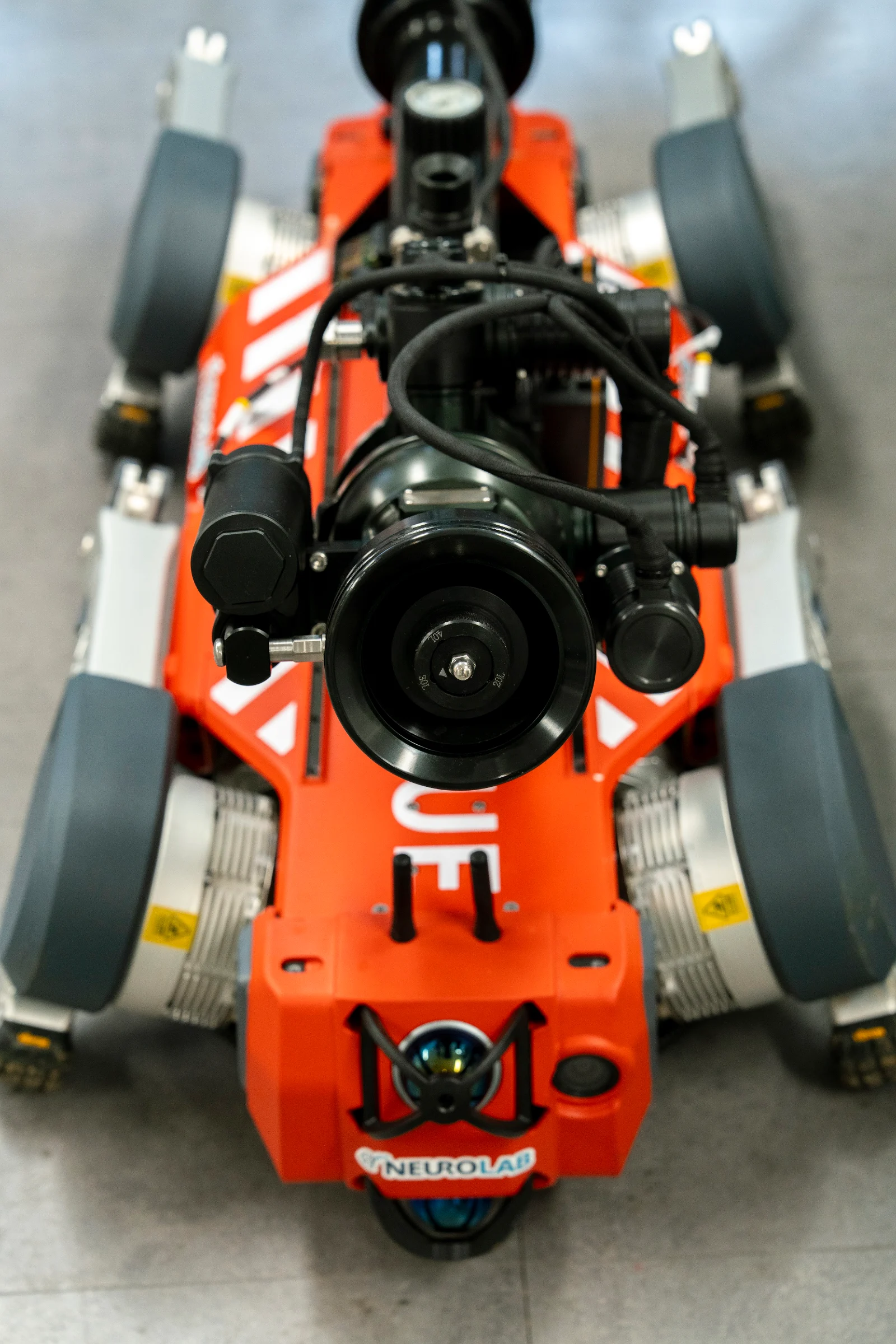
The strengths of our robot solutions stand out even more at display manufacturing sites, because we have built the features customers truly need into the robots, drawing on what we have learned about equipment and working environments through our parent company, EMNI.
Suppose a quadruped robot on night patrol in a display factory finds liquid near chemical piping. With only the location and video to go on, it is hard to judge what response is needed. There is also the problem that someone still has to walk up to the liquid to check it.
This is what we designed the leak analysis module for. The robot lowers its body, touches pH test paper to the leaked liquid and reads the color change with its camera. The used paper is wound up and collected, and a fresh section is fed in for the next measurement. Another option is to use an indicator solution.
Our goal is to check whether the leaked liquid is acidic, alkaline or neutral and relay the result to the control screen. The test does not go as far as identifying the substance or determining whether it is safe. We still have to validate how reliably it can read results across different target substances and site conditions.
In this way, NeuroLab is translating needs in the field into hardware the robots can carry and into operations software. By combining the understanding of manufacturing sites we have gained through EMNI with our own custom development on top of the robots and our in-house integrated control system, we are steadily making the robots capable of the work customers actually want to hand over to them.
As we show the control system at the expo, we want to hear which tasks customers would like to hand over to robots first. We do not think robots need to be deployed across an entire factory from the start. We would like to begin with a single area where night inspections are a burden and see whether patrols run reliably and whether the necessary information arrives on time. Based on those results, we plan to decide the scope of the next deployment together with the customer.
We are already looking forward to seeing which prospective customers we will meet at the show. Our next post will bring news from WAVE 2026.